Battery Energy Storage · LFP

Battery storage that pays for itself.

Commercial-scale lithium iron phosphate BESS — designed to flatten demand charges, capture FCAS revenue and keep critical loads online.

01 — Overview

ESQ engineers behind-the-meter and front-of-meter battery storage from 50 kWh to 20 MWh. Every BESS is sized against your load profile, network tariff and revenue stack — peak shaving, demand response, wholesale arbitrage and FCAS markets are modelled before a kilowatt-hour is procured.

Industrial peak shavingCritical backup (data centres, hospitals)Solar firmingFCAS & wholesale arbitrageOff-grid & fringe-of-gridVirtual power plants
Spec Sheet
Capacity
50 kWh — 20 MWh
Chemistry
LFP · UL 9540A tested
Cycle life
8,000+ cycles @ 80% DoD
Round-trip
94% AC-AC
Response
<200 ms islanding
Cooling
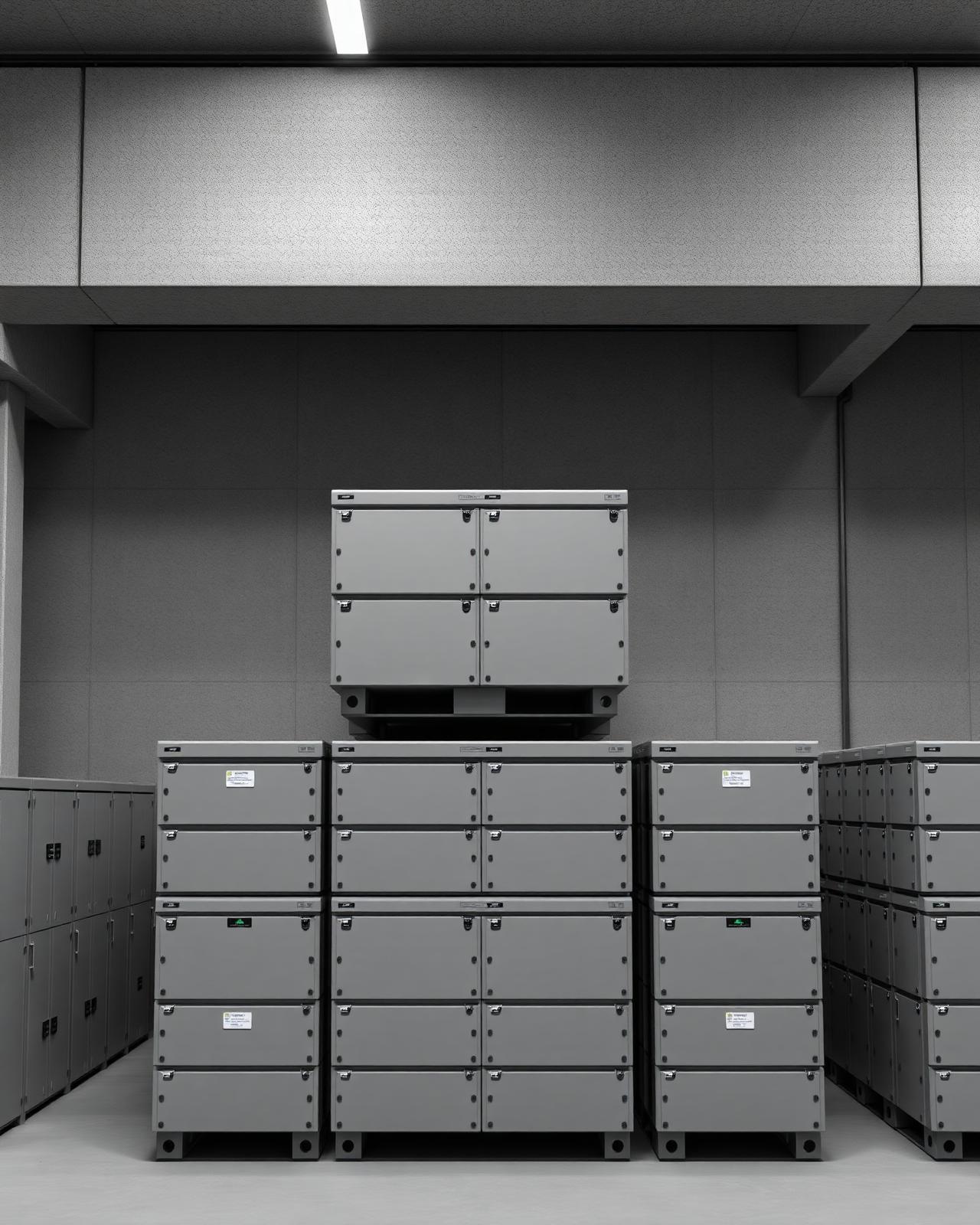
Liquid-cooled containerised
Compliance
AS/NZS 5139, 4777.2
Warranty
10 yr · 70% capacity retention
Request technical quote
02 — Capabilities

What ESQ delivers across this practice.

C-01

Load profile analysis

Interval-data modelling across 12+ months to identify peak windows, demand charges and arbitrage opportunities.

C-02

Containerised BESS

Outdoor-rated, liquid-cooled enclosures from Tesla, Sungrow, BYD and Powin — pre-commissioned and crane-set on site.

C-03

Hybrid AC & DC coupling

Storage paired with new or existing PV via AC-coupled or DC-coupled topologies for maximum round-trip efficiency.

C-04

Energy management system

ESQ-OS dispatches against tariff signals, market prices and site setpoints — including grid-services revenue stacking.

C-05

FCAS & wholesale market participation

AEMO registration, telemetry, and bidding strategy for Frequency Control Ancillary Services and energy market revenue.

C-06

Backup & islanding

Seamless transfer to islanded operation with prioritised load shedding for critical infrastructure continuity.

03 — Delivery

A disciplined, engineered process.

  1. 01

    Model

    12-month interval data → revenue stack model.

  2. 02

    Design

    Sizing, topology, EMS strategy, grid application.

  3. 03

    Deploy

    Containerised delivery, civil works, HV connection.

  4. 04

    Dispatch

    EMS tuning, market registration, 24/7 monitoring.

04 — FAQs

Common technical questions.

How is payback calculated?
Through stacked revenue: demand-charge reduction, energy arbitrage, solar self-consumption, FCAS contingency markets and capacity payments. Most commercial sites achieve 4–7 year payback.
Is LFP safer than NMC?
Yes. Lithium iron phosphate has fundamentally lower thermal runaway risk and is the standard for all ESQ commercial deployments. Every cabinet passes UL 9540A large-scale fire testing.
Can the BESS keep my site running in a blackout?
When islanding mode is specified, yes — with sub-200ms transfer. Backup duration depends on capacity vs prioritised load.
Do I need a fire engineer or AHJ approval?
Most BESS installs require a fire engineer's report and DA approval. ESQ manages this end-to-end as part of the engineering scope.

Scope your project with an ESQ engineer.

Brisbane HQ, servicing all of Australia. 48-hour response on commercial briefs.